



|
Universal coating “OBEREG SHOS-911” UNIVERSAL COATING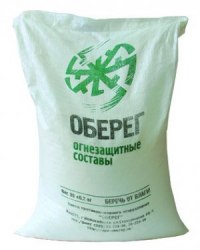
Minimum quantity: 20 kg
Price per kg: 77 RUB
Qty(kg): 


“OBEREG SHOS-911” UNIVERSAL COATING
TU 1526-009-73958298-2010 C.RU.PB58.В.01057 ВY.20.21.01.008.Е.000920.07.14
FOR STRUCTURAL PROTECTION OF METAL CONSTRUCTIONS FROM FIRE “OBEREG SHOS-911” is used for structural flame protection of bearing and walling steel constructions, in both public and industrial construction sites. Increases the period of flame-resistance for steel construction up to 150 minutes. Coating is well resistant to vibrations and mechanical damage. Does not contain substances harmful for human and environment. Shipped as lightweight dry plaster solution.
PHYSICAL, CHEMICAL AND MAINTENANCE PROPERTIES
SURFACE PREPARATION Coated steel constructions should be clean and dry, degreased if needed. To degrease the surface, use liquid alkaline detergents. Any traces of detergent should be washed off with water. Steel constructions without anti-corrosion coating should be thoroughly mechanically cleaned of rust and dirt, then coated with GF-021 undercoat according to Sanitary Norms and Rules 2.03.11-85 “Protecting building constructions from corrosion”. Adhesion of undercoat layer to metal surface should not exceed 2 points according to GOST 15140 (for grid cuts method).
Fire-resistant coating can be applied after undercoat drying to level 5 according to GOST 19007-73. Thorough surface preparation for fire-resistant coating application will help to avoid further issues with material peeling off and surface defects.
PREPARING PLASTER OPERATING SOLUTION Dry plaster solution should be mixed with water either in wet mixing devices, or with hand held electric mixer. Water should be poured first, with the dry solution following after. Dry solution to water ratio depends on application method and varies between 2:3 and 1:1. Operating solution should be thoroughly stirred to achieve sour cream-like consistence. Resulting mix should be left intact for 10 minutes, then stirred again. The operating solution should be used up within 1-2 hours after preparation. Applying solidified solution is prohibited, as well as adding water to extend the period of operating solution usability.
APPLYING PLASTER OPERATING SOLUTION The plaster operating solution is being applied in accordance with Sanitary Norms and Rules 2.03.11-85 “Protecting building constructions from corrosion”. During the operation, air temperature should be above +5ºС, humidity should be below 75%. Constructions should be protected from atmospheric condensation.
Fire-resistant coating is being applied over surface coated with GF-021 (GOST 25129) via wet layered smoothing, or using putty knife. First layer should not exceed 5-6 mm to achieve maximum adhesion with the coated surface. If any drips appear on vertical surfaces, increase viscosity of the solution. Coating thickness is measured immediately after application. Before applying the next layer, ensure that the solidification of the previous layer have started. Further layers are being applied with thickness up to 10 mm, 4-5 hours after previous one has started to solidify. Layers are applied until needed dry layer thickness is achieved.
Complete solidification of the coating takes 25-30 days.
Coating thickness is measured with calipers or needle according to GOST R 53295-2009.
After application and drying of the operating solution, fire-resistant coating forms on a surface, compositionally identical to the original dry solution. Coating can be exploited in atmospheric conditions. In this case, atmospheric-resistant paint coating should be applied over the fire-resistant layer.
Note: When applying “OBEREG SHOS-911” fire-resistant coating in conditions of high temperatures, low humidity and free air circulation, to avoid material peeling and cracks forming, it is recommended to moisten the treated surfaces 24 hours after applying the operating solution.
COVERAGE RATES AND COATING THICKNESS «OBEREG SHOS-911» coverage rates and dry layer thickness are determined depending on required fire resistance period (SNaR 21-01-97*) and the metal constructions thickness (GOST R 53295-2009). Dependencies of coverage rate and thickness of dry layer applied over anti-corrosion 0.05mm coating from metal construction thickness are displayed in the following table:
Theoretical coverage rate of dry solution per square meter is 0.4kg per 1mm of fire-resistant coating layer (without technical losses). Technical losses of plaster operating solution during its applications vary between 10% and 30% depending on application method, treated construction parameters, environmental conditions during the operation. * The method to determine coverage rates and recommended thicknesses of «OBEREG SHOS-911» fire-resistant coating was developed based on the results of experiments held by SPC ОBEREG LLC specialists as well as certification tests. During the development of steel constructions fire protection projects, this method allows to determine required coverage rate and protective layer thickness in each specific case.
COATING PROTECTION FROM ENVIRONMENTAL DAMAGE When using the fire-resistant coating in conditions of high humidity (over 80%), altering temperatures or in aggressive environmental effects, additional protective layer needs to be applied on top of it. Varnishes and paints resistant to atmospheric effects and aggressive environments can be used to form this additional protective coating. Before applying additional protective coating, make sure that the fire-resistant coating has achieved its terminal strength.
“OBEREG SHOS-911” UNIVERSAL COATING
Чтобы увидеть данную информацию пожалуйста авторизуйтесь. Чтобы увидеть данную информацию пожалуйста авторизуйтесь. |
|
||||||||||||||||||||||||||||||||||||||||||||||||||||||||||||||||||||||||||||||||||||||||||||||||||||||||||||||||||||||||||||